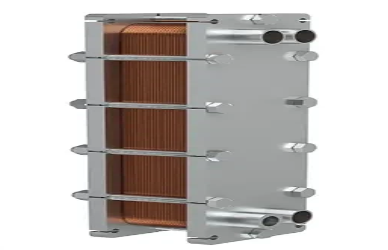
Evaporator heat exchangers are critical components in many industrial and commercial systems, helping to transfer heat efficiently between two fluids. However, over time, evaporators can accumulate scaling and fouling, which can drastically reduce their performance, increase maintenance costs, and even lead to equipment failure. Understanding the causes, consequences, and maintenance strategies for scaling and fouling is essential to ensure optimal performance and longevity of evaporator heat exchangers.
In this article, we will explore the common causes of scaling and fouling, their impacts on heat exchangers, and provide a comprehensive maintenance checklist to prevent these issues. By following these practices, you can ensure your evaporator heat exchanger operates efficiently and has a long operational life.
1.What is Scaling and Fouling?
Scaling
Scaling is the accumulation of hard, mineral deposits on the heat exchanger surfaces. This occurs primarily due to the precipitation of minerals, such as calcium, magnesium, and silica, that are present in the water used in the heat exchanger. As the temperature rises, these minerals come out of solution and form solid deposits on the heat transfer surfaces, inhibiting heat exchange efficiency.
Fouling
Fouling, on the other hand, refers to the accumulation of organic matter, biological growth (such as algae and bacteria), or particulate matter in the heat exchanger. Fouling can significantly impede fluid flow, degrade heat transfer, and contribute to corrosion. It typically occurs due to the buildup of impurities in the working fluids or improper system operation.
2.The Impact of Scaling and Fouling on Performance
Scaling and fouling have a direct and detrimental effect on the performance of evaporator heat exchangers. The following are the primary impacts:
Reduced Heat Transfer Efficiency
Both scaling and fouling create barriers between the heat exchange surfaces and the fluids, reducing the rate of heat transfer. This results in lower thermal efficiency and less effective heating or cooling.
Increased Energy Consumption
To compensate for reduced heat transfer, the system may need to work harder, requiring more energy to achieve the desired temperatures. This leads to increased operating costs.
Higher Maintenance and Repair Costs
Frequent maintenance and cleaning are required to address the buildup of scales and fouling. In severe cases, the heat exchanger may need to be replaced, which adds to the maintenance costs.
Shorter Lifespan of the Equipment
The prolonged presence of scaling and fouling can cause mechanical stress and corrosion, shortening the lifespan of the heat exchanger and other related components.
3.Maintenance Checklist for Preventing Scaling and Fouling
Proper maintenance is essential for preventing scaling and fouling in evaporator heat exchangers. Below is a comprehensive checklist of essential maintenance practices:
Routine Inspections
Regular inspections are key to identifying potential scaling and fouling early. A professional technician should inspect the heat exchanger surfaces for signs of mineral buildup or organic matter accumulation. In many cases, scaling and fouling can be detected by measuring the pressure drop across the system or observing changes in temperature efficiency.
Inspection Task | Frequency | Purpose |
Inspect heat exchanger surfaces | Every 3-6 months | To detect early signs of scaling or fouling |
Monitor pressure and temperature drops | Monthly | To identify blockages and reduced heat transfer |
Check fluid flow rate | Every 3 months | To ensure adequate flow and detect flow restrictions |
Proper Water Treatment
Controlling the quality of the water or other fluids used in evaporator heat exchangers is crucial for preventing scaling. Hard water, which contains high levels of calcium and magnesium, can cause significant scaling. Using water softeners or chemical inhibitors can help prevent these minerals from precipitating onto the heat exchanger surfaces.
Water Treatment Solutions:
Water Softeners: Removes calcium and magnesium ions to reduce the potential for scaling.
Chemical Inhibitors: Used to prevent the formation of scale by altering the chemical properties of the water.
pH Adjusters: Maintaining proper pH levels ensures the water does not become overly alkaline or acidic, both of which can lead to scaling.
Cleaning Techniques
Regular cleaning of the evaporator heat exchanger is one of the most effective ways to prevent scaling and fouling. The cleaning frequency depends on the severity of fouling and the type of fluid being used.
Chemical Cleaning: Chemical cleaning involves using specialized cleaning agents to dissolve scaling and remove deposits from the heat exchanger surfaces. This method is effective for both light and heavy scaling.
Mechanical Cleaning: Mechanical cleaning methods, such as scraping or brushing, can be used to remove solid deposits. This is typically done for fouling caused by particulate matter.
Backflushing: Backflushing is the process of reversing the flow of fluid through the heat exchanger to dislodge and flush out deposits. This method is particularly effective for fouling caused by particulate matter.
Monitoring Fluid Flow
Regularly monitoring the flow rate of the fluid through the heat exchanger is crucial for detecting fouling early. A decrease in flow rate or a pressure drop may indicate that the system is becoming clogged with deposits.
Monitoring Task | Frequency | Purpose |
Measure fluid flow rate | Monthly | To detect flow restrictions caused by fouling |
Check pressure drop across the system | Monthly | To monitor for potential blockages or scaling buildup |
Inspect fluid composition | Quarterly | To check for contaminants that may cause fouling |
Temperature Control
Temperature fluctuations can contribute to both scaling and fouling. Rapid temperature changes or excessive temperatures can cause minerals to precipitate, while low temperatures can lead to condensation and microbial growth. It is essential to maintain consistent temperature levels within the recommended operating range.

4.Advanced Techniques for Mitigating Fouling and Scaling
For more advanced applications, implementing state-of-the-art technologies can significantly enhance the efficiency of evaporator heat exchangers and reduce maintenance needs.
Anti-Scaling Materials
Using advanced materials with anti-scaling properties can prevent the formation of deposits. These materials have surface coatings that prevent mineral precipitation, making it easier to maintain heat exchanger surfaces. Some anti-scaling coatings can even be applied to existing heat exchangers, improving their performance and reducing cleaning frequency.
High-Efficiency Backwashing
Backwashing is an efficient method for cleaning fouled heat exchangers. Newer systems incorporate high-efficiency backwashing techniques that provide more thorough cleaning and reduce water consumption. These systems are designed to handle larger amounts of debris and reduce the need for chemical cleaning.
Ultrasonic Cleaning Technology
Ultrasonic cleaning technology uses high-frequency sound waves to create vibrations that dislodge deposits from heat exchanger surfaces. This method is highly effective for removing fouling caused by organic materials and fine particles without the need for harsh chemicals or mechanical cleaning.
FAQ
What are the most common causes of scaling in evaporator heat exchangers?
Scaling is primarily caused by hard water that contains high levels of minerals like calcium, magnesium, and silica. When the temperature of the water increases, these minerals precipitate out of solution and form solid deposits on the heat exchanger surfaces. This buildup hinders the heat exchange process, reducing efficiency. Scaling is more likely to occur in systems that handle high-temperature fluids or where water quality is not properly managed.
How often should an evaporator heat exchanger be cleaned?
The cleaning frequency for an evaporator heat exchanger largely depends on the operational conditions, including water quality, fluid flow, and the type of fluid being circulated. In general, it is recommended to inspect and clean the heat exchanger every 3 to 6 months. However, more frequent cleaning may be necessary in environments with hard water or where fouling and scaling are more likely to occur. Regular inspections will help determine the optimal cleaning schedule based on system performance and fouling conditions.
Can scaling be completely prevented in evaporator heat exchangers?
While scaling cannot be entirely prevented, it can be significantly minimized with the proper measures. Effective water treatment systems, such as water softeners or chemical inhibitors, can reduce the mineral content in the water and prevent the formation of scales. Additionally, regular maintenance, including cleaning and monitoring of water chemistry, helps to reduce the buildup of minerals. Though complete prevention is challenging, these strategies can dramatically reduce the frequency and severity of scaling issues.
What are the signs that fouling is occurring in an evaporator heat exchanger?
Fouling can be detected by several symptoms in the system. Common signs include a decrease in fluid flow rate, which may indicate blockages or deposits restricting movement. Increased pressure drops across the heat exchanger are another indicator of fouling. Additionally, a noticeable reduction in heat transfer efficiency is a key sign that fouling is present. Changes in the temperature distribution across the heat exchanger, such as uneven heating or cooling, may also suggest fouling. If any of these signs are observed, immediate action should be taken to inspect and clean the unit.
Conclusion
Preventing scaling and fouling in evaporator heat exchangers is crucial for maintaining optimal heat transfer efficiency and minimizing maintenance costs. By following the maintenance checklist outlined above, which includes routine inspections, proper water treatment, regular cleaning, and monitoring fluid flow, you can significantly reduce the risk of scaling and fouling. Additionally, implementing advanced technologies like anti-scaling materials, high-efficiency backwashing, and ultrasonic cleaning can further enhance the performance and longevity of your evaporator heat exchanger.