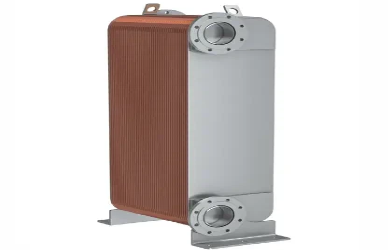
Pressure vessels used in brazed heat exchangers are critical for maintaining high-performance levels, ensuring safety, and avoiding costly breakdowns or accidents. These pressure vessels are designed to handle high-pressure fluids and operate in high-temperature environments. As a result, safety, durability, and reliability are paramount.
The ASME and CE standards are two of the most widely recognized sets of regulations that ensure brazed heat exchangers perform efficiently and safely. These standards define the design, construction, testing, and operational safety requirements for brazed heat exchanger pressure vessels, making them integral to achieving the desired performance and safety outcomes.
1.What Are Brazed Heat Exchanger Pressure Vessels?
Definition and Components of a Brazed Heat Exchanger Pressure Vessel
A brazed heat exchanger pressure vessel is a sealed system designed to efficiently transfer heat between two fluids, typically a refrigerant and water or air. These vessels are made by joining metal plates together using a brazing process, creating a leak-proof and high-performance unit. The heat exchanger’s primary function is to optimize heat transfer while withstanding high-pressure conditions and ensuring the integrity of the system under thermal stress.
The key components of a brazed heat exchanger pressure vessel include:
Brazed plates: These are typically made of materials like stainless steel or copper and are designed to offer maximum heat transfer efficiency.
Seals: High-quality seals prevent leakage, ensuring the pressure vessel remains intact.
Headers and connections: These parts facilitate the flow of fluids into and out of the system, allowing for optimal performance.
Outer shell: The external structure of the vessel is built to withstand high-pressure conditions.
These components must be carefully constructed and tested to meet both ASME and CE standards, ensuring their performance and safety in commercial and industrial settings.
Role in HVAC and Industrial Systems
In HVAC and refrigeration systems, brazed heat exchangers serve as the heart of the cooling process. Whether it's a home air conditioning unit, a large commercial chiller, or industrial heat recovery systems, brazed heat exchangers are critical for maintaining efficiency and safety.
The brazing technology used to create the heat exchanger plates allows for compact, space-saving designs that can deliver efficient heat transfer even in systems with limited space. The pressure vessel component ensures the system can handle high-pressure refrigerants or fluids, maintaining safe and effective operation.
2.Understanding ASME Standards for Brazed Heat Exchanger Pressure Vessels
Overview of ASME (American Society of Mechanical Engineers)
ASME is a global leader in setting standards for mechanical engineering, with a strong focus on the design, construction, and maintenance of pressure vessels. ASME’s codes are widely recognized, especially in North America and many parts of the world. The ASME Boiler and Pressure Vessel Code (BPVC) is the primary standard for ensuring the safety and performance of pressure vessels, including those used in brazed heat exchangers.
Key ASME Standards for Pressure Vessels
ASME standards for pressure vessels cover everything from material selection to design criteria, fabrication processes, inspection, and testing. For brazed heat exchangers, the most relevant standards include:
ASME BPVC Section VIII: This section covers the requirements for the design and construction of pressure vessels. It ensures that brazed heat exchanger pressure vessels are built to withstand high pressures and meet stringent safety standards.
ASME Section II: This section specifies the material requirements for pressure vessels, including acceptable metals and alloys. Brazed heat exchangers must use materials that meet these standards for strength, durability, and heat resistance.
ASME Section V: This section deals with inspection and testing methods, including non-destructive testing (NDT), to ensure that brazed heat exchangers meet the necessary safety and quality standards before they are put into operation.
Requirements for Brazed Heat Exchangers under ASME Standards
For brazed heat exchangers, ASME standards impose a series of critical requirements to ensure that pressure vessels are safe, reliable, and efficient. Some of these include:
Pressure Testing: Brazed heat exchangers must undergo hydrostatic testing to ensure they can withstand the rated pressure without failure.
Design Stress Limits: The design of the pressure vessel must adhere to ASME’s stress analysis calculations to ensure that the vessel can handle the expected operating pressures and temperatures.
Material Certification: All materials used in the construction of brazed heat exchangers must be certified by ASME to ensure they meet the required mechanical properties, including strength and resistance to corrosion.
Inspection and Documentation: A thorough inspection and documentation process is required to verify that the brazed heat exchanger pressure vessel complies with all relevant ASME standards.
3.Understanding CE Standards for Brazed Heat Exchanger Pressure Vessels
Overview of CE (Conformité Européenne) and Its Relevance
The CE mark is a mandatory conformity mark used in the European Union to indicate that a product complies with all relevant European health, safety, and environmental regulations. For pressure vessels used in brazed heat exchangers, the CE mark ensures that the product has been manufactured in compliance with the European Pressure Equipment Directive (PED) 97/23/EC, a key piece of legislation that governs the safety of pressure vessels in the EU.
Key CE Directives for Pressure Vessels
The CE standards for brazed heat exchangers are primarily outlined in the Pressure Equipment Directive (PED) 97/23/EC, which ensures that pressure equipment meets safety, health, and environmental requirements for use in Europe. The directive covers a wide range of pressure equipment, including heat exchangers, and sets out specific requirements for design, manufacture, and conformity assessment.
PED 97/23/EC: This directive outlines the safety requirements for pressure vessels used in industrial and commercial applications. It ensures that pressure vessels like brazed heat exchangers are designed to handle specific pressure ranges and are constructed from materials that are safe for operation under those conditions.
CE Marking Process and Its Importance
To comply with CE standards, brazed heat exchangers must undergo a conformity assessment process. This includes:
Design Review: A comprehensive review of the design to ensure it meets the necessary requirements for pressure, temperature, and material properties.
Testing and Certification: Brazed heat exchangers must undergo testing to ensure they can withstand operational pressures and temperatures without failure.
CE Marking: Once the product is certified, it is affixed with the CE mark, indicating that it meets all necessary safety and performance standards for use in the European Union.
4.Comparison of ASME and CE Standards
Feature | ASME Standards | CE Standards |
Region of Application | Primarily North America and globally | European Union (EU) and EEA countries |
Main Regulation | ASME BPVC Section VIII | PED 97/23/EC |
Material Requirements | Specifies allowable materials | Requires CE-approved materials |
Pressure Testing | Hydrostatic and other tests | Pressure testing as per PED |
Inspection | Detailed inspection and certification | Conformity assessment for CE marking |
Design Criteria | Stress analysis and design stress limits | Compliance with design standards |
While both standards aim to ensure the safety and reliability of pressure vessels, they are tailored to different regulatory environments. ASME standards focus on North American safety regulations, while CE standards ensure compliance with European Union requirements. In global markets, manufacturers often need to meet both sets of standards to sell their brazed heat exchangers internationally.

5.Why Compliance Matters: The Role of Standards in Quality Assurance
Quality Assurance: Ensuring Optimal Performance in High-Pressure Applications
Compliance with ASME and CE standards ensures that brazed heat exchangers are built to perform optimally in high-pressure applications. These standards enforce strict guidelines on design, materials, and testing, guaranteeing efficient and reliable performance. By meeting these requirements, brazed heat exchangers can operate with reduced failure risk under pressure, ensuring the system runs smoothly and safely.
Safety: Protecting Equipment and Operators
Meeting ASME and CE standards ensures the safety of both the equipment and its operators. These standards require rigorous pressure testing, material checks, and structural integrity assessments, ensuring the heat exchangers can handle extreme conditions without failure. Compliance reduces the risk of system failures, leaks, or ruptures, safeguarding both the equipment and personnel.
Global Market Access: Expanding Business Opportunities
For manufacturers, meeting both ASME and CE standards enables access to international markets. These certifications are often required for products in industries like HVAC and refrigeration, helping manufacturers expand their reach in North America, Europe, and beyond. Compliance enhances market acceptance and competitiveness, opening new business opportunities and building trust with global customers.
Frequently Asked Questions (FAQ)
1. What is the role of ASME standards for brazed heat exchangers?
ASME standards, especially those under ASME BPVC Section VIII, govern the design, construction, and testing of brazed heat exchangers, ensuring they meet required safety, performance, and pressure-handling criteria.
2. What are the CE standards for brazed heat exchanger pressure vessels?
CE standards, outlined in the Pressure Equipment Directive (PED) 97/23/EC, ensure brazed heat exchangers meet EU safety, health, and environmental regulations for pressure vessels.
3. Why do brazed heat exchangers need to meet both ASME and CE standards?
Meeting both ASME and CE standards allows brazed heat exchangers to be sold and used internationally, ensuring they comply with the regulatory requirements of both North America and Europe.
4. How do ASME and CE standards ensure the safety of brazed heat exchangers?
Both ASME and CE standards require rigorous testing, material certification, and design compliance to ensure brazed heat exchangers can withstand high-pressure environments safely without failure.
![]()
![]() Conclusion
Conclusion
ASME and CE standards play a crucial role in ensuring that brazed heat exchanger pressure vessels meet the necessary safety and performance benchmarks. These standards help manufacturers create products that are durable, reliable, and safe for use in demanding applications. By adhering to these rigorous standards, brazed heat exchangers can operate efficiently and safely, meeting global regulatory requirements and ensuring customer satisfaction in various industrial and commercial sectors.