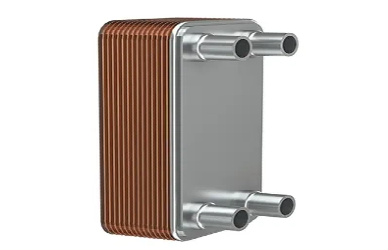
Heat exchangers are vital components in HVAC and refrigeration systems, facilitating the transfer of heat between fluids or gases without them mixing. They play an essential role in maintaining efficient temperature control, ensuring systems operate effectively and sustainably. Evaporator heat exchangers, in particular, are crucial for cooling applications. They work by absorbing heat from the air, water, or another medium and transferring it to a refrigerant, causing the refrigerant to evaporate from a liquid to a gas. This phase change is essential for lowering temperatures in systems like air conditioners, refrigerators, and industrial cooling units. By optimizing the heat absorption process, evaporator heat exchangers enable energy-efficient cooling, making them a key component in various thermal systems.
1.Principles of Evaporator Heat Exchangers
Basic Working Principle: Heat Absorption and Phase Change
The primary function of an evaporator heat exchanger is to absorb heat from the surrounding environment. This process relies on the principle of heat absorption and phase change. In the evaporator, a refrigerant, which is typically in liquid form, is allowed to flow through a series of tubes or plates. As the liquid refrigerant comes into contact with the warmer air or fluid surrounding it, it absorbs heat and begins to evaporate. This heat absorption lowers the temperature of the surrounding medium, providing the cooling effect in HVAC and refrigeration systems.
How Evaporators Convert Liquid Refrigerant into Gas
Evaporators operate on the principle of latent heat – the heat required for a substance to change its state without changing its temperature. In an evaporator heat exchanger, liquid refrigerant enters the evaporator coils at a low temperature and pressure. As the refrigerant absorbs heat from the environment, its temperature rises. Upon reaching a certain temperature, the refrigerant undergoes a phase change from a liquid to a gas (vapor). This phase change is a key part of the cooling process, as the refrigerant absorbs a large amount of heat during this transformation without increasing in temperature.
The Heat Exchange Process Within the Evaporator
The heat exchange process in the evaporator occurs through conduction, convection, and the refrigerant’s latent heat. As the refrigerant evaporates, it absorbs heat from the surrounding air or water via convection. The heat is transferred to the refrigerant through the surface of the evaporator's heat transfer surfaces (tubes or plates), where it then evaporates and rises as a gas. This process continues until the refrigerant has fully vaporized, carrying the absorbed heat with it. This makes the surrounding environment cooler while the refrigerant exits the evaporator as a low-pressure, low-temperature gas, ready to continue its journey through the refrigeration cycle. This heat exchange cycle is vital for maintaining efficient cooling in systems like air conditioners, refrigeration units, and industrial cooling processes.
![]() 2.Types of Evaporator Heat Exchangers
2.Types of Evaporator Heat Exchangers
Evaporator heat exchangers come in different designs to suit various applications and efficiency needs. The most common types are Direct Expansion (DX) evaporators, flooded evaporators, shell and tube evaporators, and plate heat exchangers. Each has unique features for specific cooling systems.
Direct Expansion (DX) Evaporators
Key Features:
Refrigerant expands and evaporates directly in the evaporator coil.
Compact design for smaller systems.
Advantages:
Efficient for variable load systems.
Minimal maintenance, as it requires fewer components.
Disadvantages:
Less efficient for large systems due to single-stage evaporation.
Flooded Evaporators
Key Features:
Refrigerant is maintained in liquid form, flooding the evaporator coil.
Provides continuous refrigerant flow for high heat transfer efficiency.
Advantages:
Higher heat transfer efficiency, ideal for large systems.
More consistent temperature control.
Disadvantages:
Requires separate refrigerant reservoir and pumps, adding complexity.
Shell and Tube Evaporators
Key Features:
Refrigerant flows through tubes inside a shell; heat is transferred to the surrounding medium.
Suitable for industrial applications.
Advantages:
Durable, large surface area for heat transfer.
Versatile for various refrigerants and fluids.
Disadvantages:
Larger size, complex design, and higher cost.
Not ideal for small applications.
Plate Heat Exchangers
Key Features:
Consist of stacked metal plates with alternating channels for refrigerant and coolant.
Compact design with high surface area for efficient heat exchange.
Advantages:
Excellent heat transfer efficiency.
Modular design allows easy maintenance and scalability.
Disadvantages:
Can clog if refrigerant or coolant is not filtered properly.
Limited for high-pressure applications.
3.Applications of Evaporator Heat Exchangers
Evaporator heat exchangers are key components in various systems, ensuring efficient heat transfer and maintaining optimal temperatures in both commercial and industrial applications.
HVAC Systems
In HVAC systems, evaporator heat exchangers absorb heat from indoor air, cooling it before circulating it throughout the building. They are crucial for air conditioning units in residential, commercial, and centralized HVAC systems. By transferring heat efficiently, evaporators help maintain comfortable indoor environments while reducing energy consumption.
Refrigeration Systems
Evaporators are essential in refrigeration systems, where they cool stored items by absorbing heat. Their efficient performance is critical for commercial refrigeration (supermarkets, cold storage) and industrial refrigeration (food processing, chemical storage). The evaporator helps maintain low temperatures, ensuring that products remain fresh and safe.
Industrial Cooling
In industrial settings, evaporators are used to cool process fluids, machinery, or facilities. They help regulate temperature in power plants, chemical factories, and manufacturing processes, ensuring equipment operates efficiently and preventing overheating.
Commercial and Industrial Refrigeration
Evaporators are central to commercial and industrial refrigeration, used in large storage areas like supermarkets and cold storage facilities. They ensure consistent cooling, vital for preserving perishable goods and meeting energy efficiency requirements.
Air Conditioning and Heat Pump Systems
In heat pump systems, evaporators absorb heat from the environment for heating or cooling. They provide efficient temperature control for residential and commercial buildings, with a single unit offering both heating and cooling functions.

4.Advantages and Challenges of Evaporator Heat Exchangers
Evaporator heat exchangers offer significant benefits in terms of energy efficiency, space-saving design, and effective cooling. However, they also present certain challenges that need to be addressed for optimal performance.
Benefits: Energy Efficiency, Compact Design, and Improved Cooling
Energy Efficiency:
Evaporator heat exchangers are designed to absorb heat efficiently, ensuring that cooling systems operate at optimal performance while consuming less energy. By effectively transferring heat from the environment to the refrigerant, these exchangers help reduce energy use, making systems more cost-effective and environmentally friendly. This efficiency is particularly important in commercial refrigeration and HVAC systems where energy consumption directly impacts operational costs.
Compact Design:
One of the key advantages of evaporator heat exchangers is their compact and space-saving design. They take up minimal space compared to traditional heat exchangers, allowing for easier integration into smaller systems. This is especially beneficial in residential or commercial settings where space is limited. The compactness also makes them more cost-effective to manufacture and install.
Improved Cooling:
Evaporators improve cooling performance by efficiently absorbing heat and maintaining a consistent temperature. In systems like air conditioning and refrigeration, the ability to absorb large amounts of heat ensures that the environment remains cool, whether in a commercial refrigerator or a residential air conditioning unit. This reliable performance enhances the overall effectiveness of cooling systems, ensuring they meet temperature control requirements.
Common Challenges: Frosting, Pressure Drops, and Maintenance
Frosting:
One of the common challenges with evaporator heat exchangers is frosting, which occurs when moisture in the air freezes on the evaporator coils. Frost buildup can obstruct the flow of air and reduce the efficiency of heat exchange, leading to higher energy consumption and the potential for system failure. Regular defrost cycles or proper airflow management is needed to mitigate this issue.
Pressure Drops:
Evaporators can experience pressure drops when refrigerants flow through the system. These drops can reduce the overall efficiency of the heat exchange process, making the system work harder to achieve the desired cooling effect. Pressure drops are often caused by poor design, clogging, or suboptimal refrigerant flow, which can lead to reduced performance and higher operational costs.
Maintenance:
Evaporator heat exchangers, especially those with complex designs like plate or shell-and-tube systems, require regular maintenance to ensure optimal performance. Over time, dirt, debris, and refrigerant impurities can build up, impacting the heat transfer process and causing wear and tear. This leads to increased maintenance costs and the need for periodic cleaning or replacement of parts. Additionally, if not properly maintained, evaporators can suffer from leaks or corrosion, which can compromise system efficiency and safety.
Frequently Asked Questions (FAQ):
What is an evaporator heat exchanger?
An evaporator heat exchanger absorbs heat from the surrounding environment and facilitates the phase change of refrigerants, turning them from liquid to gas in cooling systems. This process helps cool the air or fluids, making it a vital component in HVAC, refrigeration, and industrial cooling.
How does an evaporator heat exchanger work?
It works by allowing liquid refrigerant to absorb heat from air or water, causing the refrigerant to evaporate into a gas. This phase change reduces the temperature of the surrounding medium, providing the cooling effect needed in systems such as air conditioners and refrigerators.
What are the different types of evaporator heat exchangers?
Common types include Direct Expansion (DX) evaporators, flooded evaporators, shell and tube evaporators, and plate heat exchangers. Each type has its unique features, such as efficiency, size, and suitability for various applications like residential, commercial, and industrial cooling systems.
What are the main challenges of using evaporator heat exchangers?
Common challenges include frosting or icing buildup on the coils, which reduces heat transfer efficiency, maintaining proper refrigerant flow, and handling pressure drops that may affect system performance. Regular maintenance is required to prevent clogging, leaks, and ensure that the system runs smoothly.
Conclusion
Evaporator heat exchangers are essential components in modern cooling systems, playing a critical role in efficiently absorbing heat and maintaining desired temperatures across various applications, from HVAC to refrigeration and industrial cooling. Their ability to transfer heat effectively while maintaining a compact design makes them invaluable for both small and large-scale systems. As the demand for energy-efficient and environmentally sustainable solutions increases, evaporator heat exchangers will continue to evolve. Future advancements in materials, design, and integration with eco-friendly refrigerants will enhance their performance, further driving energy efficiency and reducing environmental impact. With increasing focus on sustainability, evaporators will remain at the forefront of developing high-performance, energy-efficient cooling technologies for the future.


 2.Types of Evaporator Heat Exchangers